
Integrated sewage equipment


The main methods for treating printing and dyeing wastewater include physical, chemical, and electrolytic methods. A combination of chemical and physical methods often achieves better results. Adsorption is the most commonly used physical method, while chemical methods primarily include coagulation and oxidation.
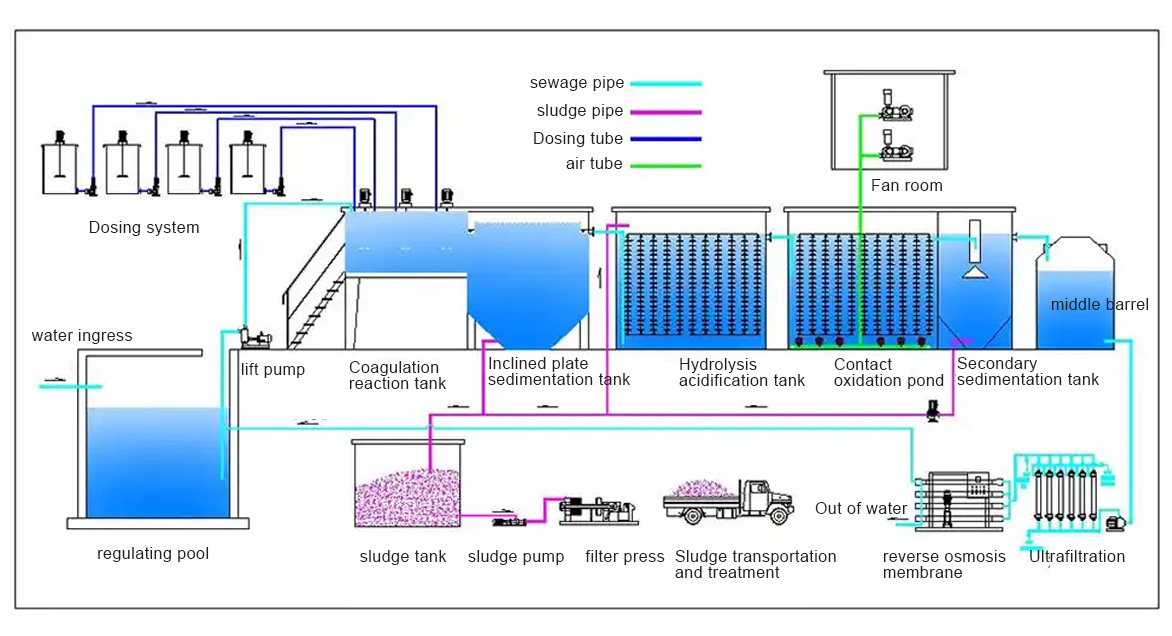
Physical treatment

This method involves mixing powdered or granular materials like activated carbon and clay with wastewater, or passing wastewater through a filter bed composed of these granular materials. These materials adsorb pollutants onto the surface of the porous material or remove them through filtration.
Adsorption treatment uses a variety of adsorbents. The selectivity of the adsorbent for dyes must be considered during the project, and the adsorbent should be selected based on the wastewater quality. Research has shown that using silica polymer (methyl oxide) as an adsorbent in printing and dyeing wastewater at a pH of 12 can achieve an anionic dye removal rate of 95%-100%. Kaolin is also an adsorbent. Research has shown that kaolin treated with long-chain organic cations can effectively adsorb yellow direct dyes in wastewater.

Chemical treatment

Water treatment methods are primarily categorized into coagulation and oxidation, each with its own effectiveness in water treatment.

Coagulation methods primarily include coagulation-sedimentation and coagulation-flotation. The coagulants used are mostly aluminum or iron salts, with basic aluminum chloride (PAC) exhibiting superior bridging adsorption properties, while ferrous sulfate offers the lowest price. The main advantages of coagulation methods include a simple process flow, easy operation and management, low equipment investment, minimal floor space, and high efficiency in decolorizing hydrophobic dyes. Disadvantages include high operating costs, high sludge production and difficulty dewatering, and poor treatment efficiency for hydrophilic dyes.

Oxidation methods primarily include ozone oxidation and photooxidation. While ozone oxidation is effective for most dyes, it is less effective for water-insoluble dyes such as those from sulfur, reduction, and coatings. Photooxidation offers high decolorization efficiency for dyeing wastewater, but equipment investment and power consumption need to be further reduced. Few domestic companies utilize this method.

Electrolytic treatment

Electrolysis is effective in treating printing and dyeing wastewater containing acid dyes, with a decolorization rate of 50% to 70%. However, it is less effective for dark-colored wastewater with high COD.

Statistically, due to differences in electrochemical properties, the COD removal rates of various dyes during electrolysis vary significantly. The order of COD removal rates is generally as follows: sulfur dyes, vat dyes - acid dyes, reactive dyes - neutral dyes, and direct dyes - cationic dyes.