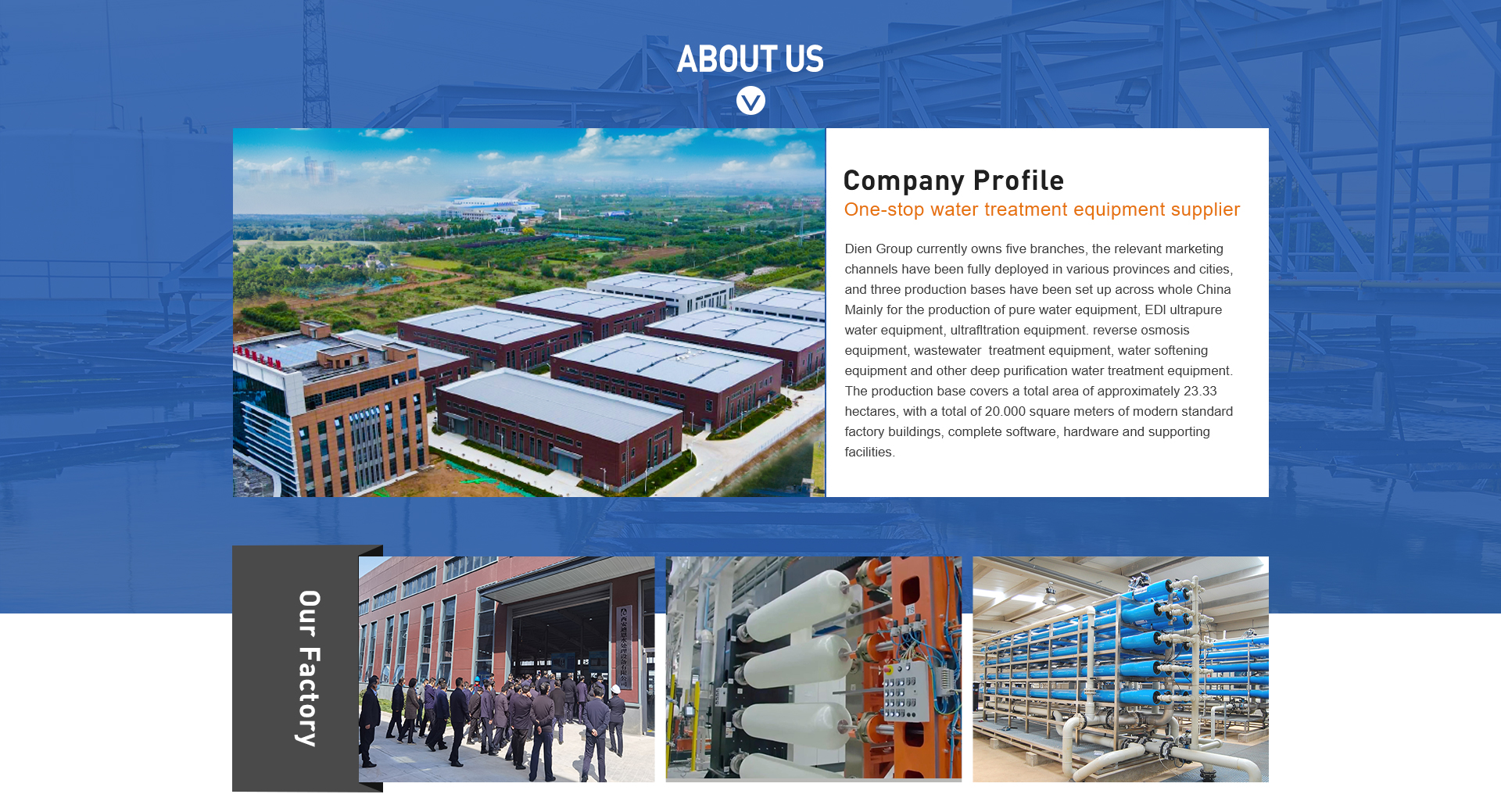
Industrial Seawater RO Desalination Plant
Product Overview
The Industrial Seawater RO Desalination Plant is designed to convert seawater into high-quality fresh water using advanced reverse osmosis membrane technology.
The system effectively removes high salinity, dissolved salts, microorganisms, and organic contaminants, providing a reliable and energy-efficient water source for industrial and municipal applications.
This plant is suitable for coastal areas, islands, offshore platforms, ships, and industries with limited freshwater resources.

Working Principle
Seawater desalination is achieved through a multi-stage pretreatment and high-pressure reverse osmosis process:
-
Pretreatment system removes suspended solids, turbidity, algae, and organic matter to protect RO membranes
-
High-pressure pump provides sufficient pressure to overcome seawater osmotic pressure
-
Seawater RO membranes separate fresh water from dissolved salts and contaminants
-
Post-treatment adjusts pH and mineral content for end-use requirements
This process ensures high salt rejection and stable freshwater output.
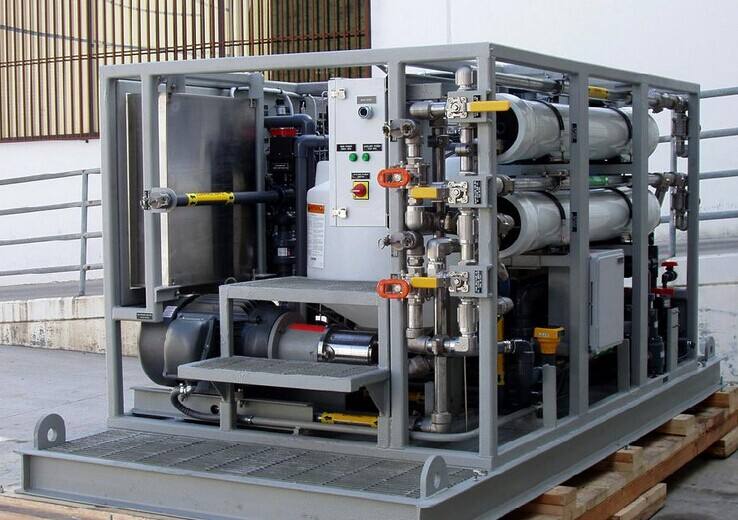
Key Features & Advantages
-
High desalination efficiency (salt rejection ≥99.7%)
-
Designed for high salinity seawater (TDS up to 45,000 ppm)
-
Energy-saving RO membranes
-
Automatic PLC control system
-
Corrosion-resistant materials for marine environments
-
Stable operation & long membrane lifespan
-
Modular design for easy installation and expansion
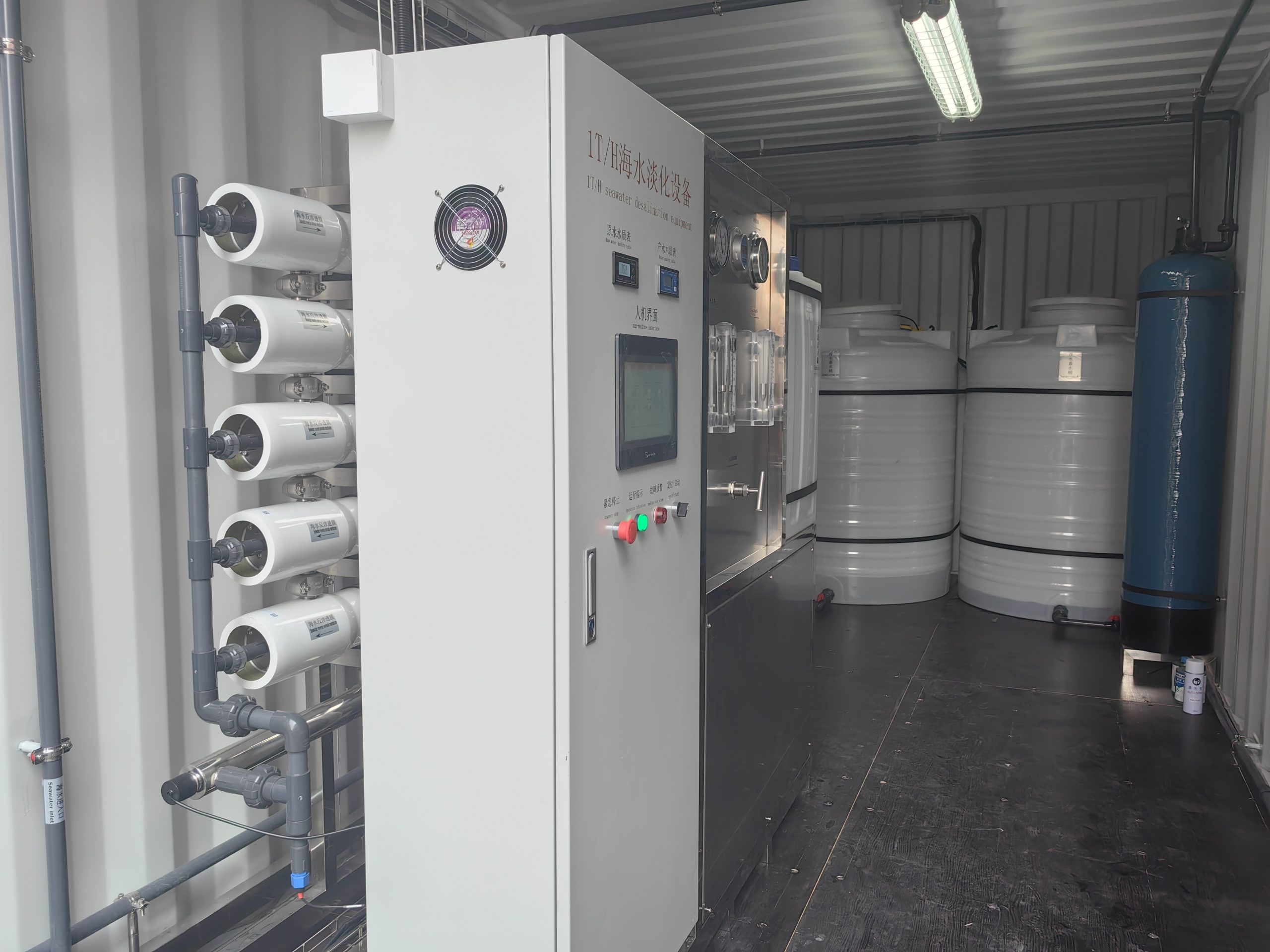
Application Fields
-
Industrial water supply
-
Municipal & community drinking water
-
Islands and coastal areas
-
Offshore platforms & ships
-
Power plants and oil & gas projects
-
Emergency & mobile water supply systems
Customization Options
-
Capacity: 5–5000 m³/day
-
RO membrane brands: DuPont / Toray / Hydranautics
-
Skid material: SS304 / SS316 / Super Duplex
-
Optional systems: Energy recovery device (ERD), CIP system, remote monitoring