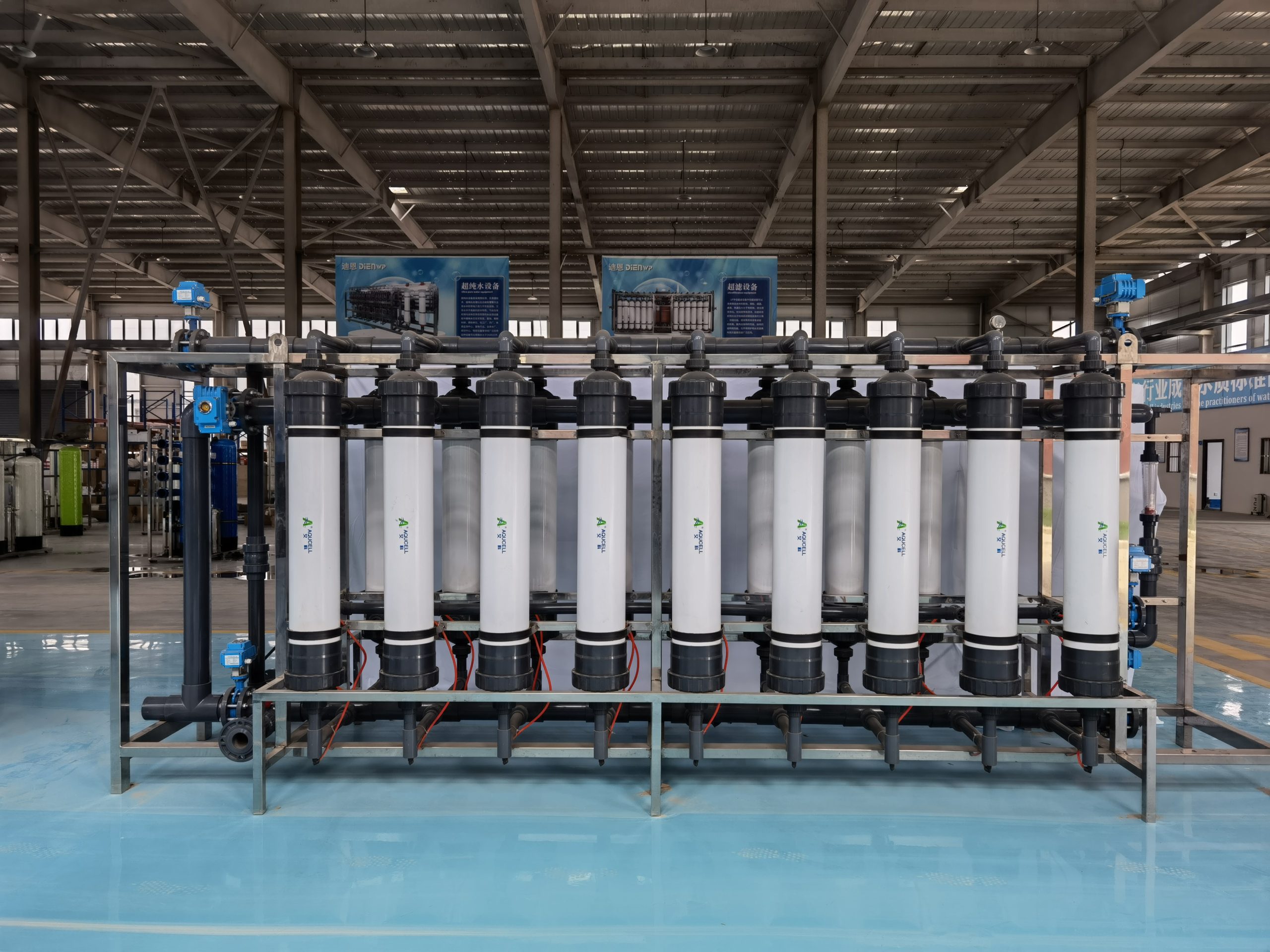
Industrial ultrafiltration equipment
Efficient & Reliable Water Pretreatment Solution
Product Overview
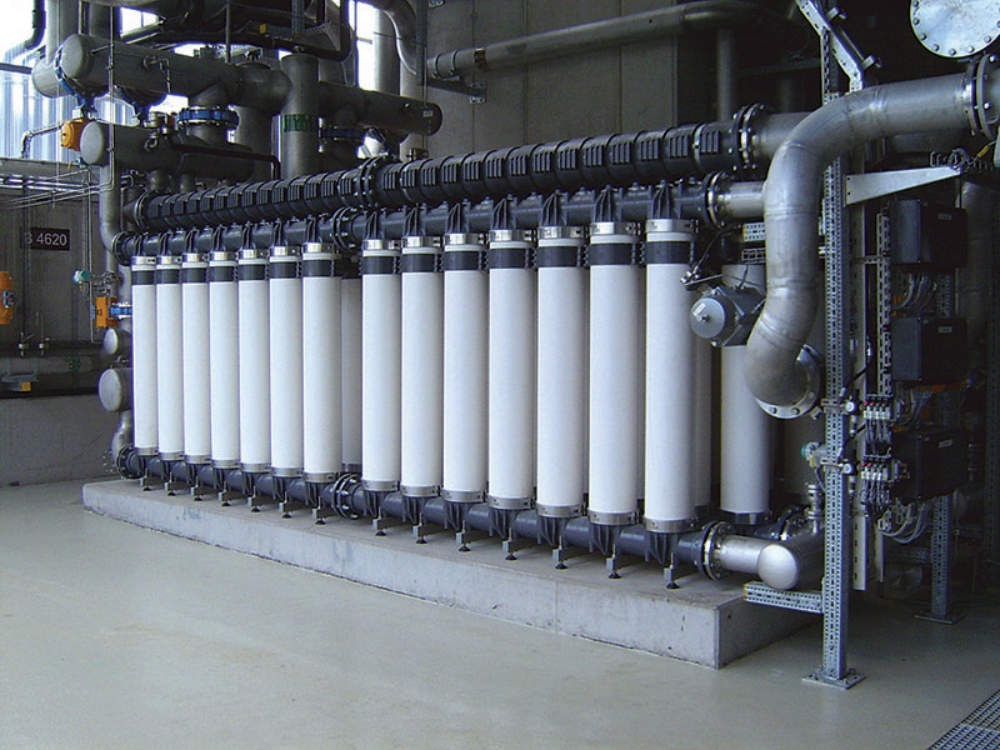
Industrial Ultrafiltration (UF) Equipment is a membrane-based water treatment system designed to remove suspended solids, colloids, bacteria, and macromolecular organic matter from water.
With high filtration accuracy and stable performance, UF systems are widely used as pretreatment for reverse osmosis (RO) or as an independent purification solution for industrial and municipal applications.
Working Principle
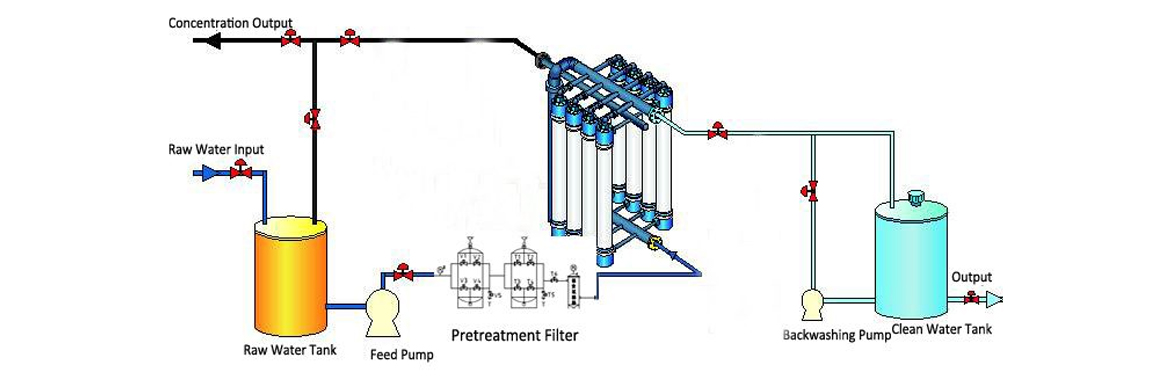
Ultrafiltration uses pressure-driven hollow fiber or flat sheet membranes with pore sizes typically ranging from 0.01–0.1 μm:
-
Water passes through the UF membrane under low pressure
-
Suspended solids, bacteria, algae, and colloids are retained
-
Clean water permeates through the membrane
-
Periodic backwashing and chemical cleaning restore membrane performance
This process ensures high turbidity removal and consistent water quality.
Advantages and features
2. The ultrafiltration process undergoes no phase change, resulting in no adverse effects on material components. Furthermore, the separation, purification, and concentration processes are performed at room temperature, making it particularly suitable for processing heat-sensitive materials. This eliminates the potential for high-temperature degradation of bioactive substances, effectively preserving the bioactive substances and nutrients in the original material system.
Application Industries
-
Industrial process water
-
Municipal water treatment
-
Surface water & river water purification
-
Food & beverage industry
-
Power plant & boiler water pretreatment
System Configuration Options
-
Capacity: 1–500 m³/h
-
UF membrane type: Hollow fiber / Flat sheet
-
Membrane material: PVDF / PES
-
Operation mode: Inside-out / Outside-in
-
Frame material: Carbon steel / SS304 / SS316
-
Optional units: Automatic dosing system, PLC control, online turbidity monitor